Automated Mould Detection & Risk Analytics
Leveraging Deep Learning, SQL, and BI for Proactive Social Housing Management
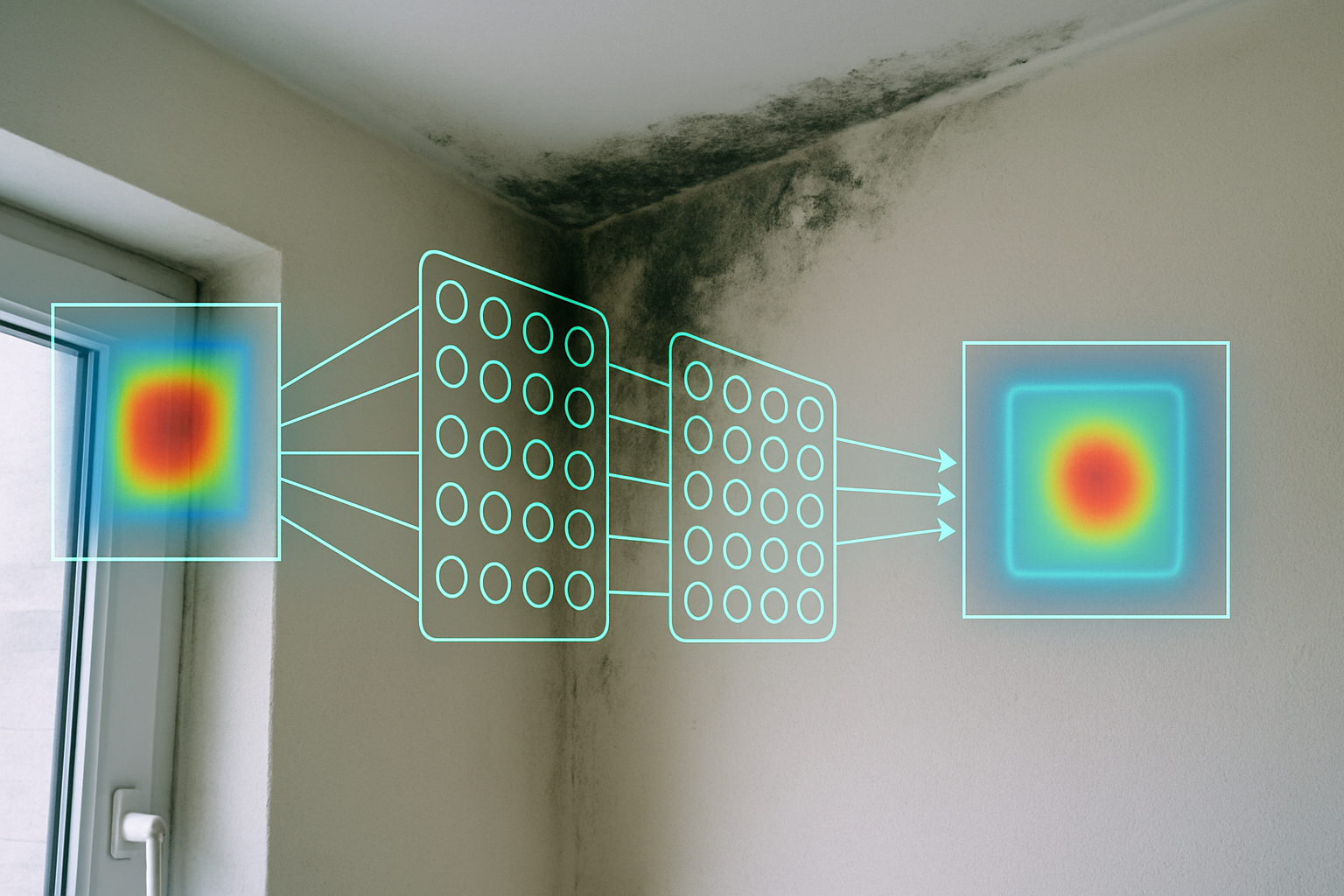
This project, originating from my MSc dissertation, addresses the critical issue of damp and mould in residential properties by developing an automated detection system. The goal is to enable proactive maintenance in the social housing sector, improving tenant well-being and operational efficiency.
The Challenge
Damp and mould are significant concerns in housing, posing health risks and leading to costly repairs if not addressed promptly. Manual inspection of thousands of property images is inefficient and slow. The challenge was to build a machine learning model capable of accurately identifying mould in images, forming the core of a larger data-driven solution.
- Context: Impact on tenant health (referencing BBC, 2022), operational burden on housing providers.
- Problem: Need for faster, scalable, and proactive mould identification.
My Solution: An End-to-End Framework
The solution encompasses image analysis using Deep Learning, data management via SQL, and insightful reporting through Power BI.
Phase 1: Data Acquisition & Preparation (Python)
- Dataset: My dissertation utilized a dataset of 7349 publicly sourced images (3681 with mould, 3668 clean). In a real-world scenario, this would be images from surveyor inspections.
- Augmentation: To improve model generalization and account for varying image quality, extensive data augmentation was performed using TensorFlow’s
ImageDataGenerator:# From your provided code train_datagen = ImageDataGenerator( preprocessing_function=preprocess_input, # from VGG16 rotation_range=90, shear_range=0.2, zoom_range=0.3, horizontal_flip=True, vertical_flip=True ) # ... train_gen setup ... - Sample Images:
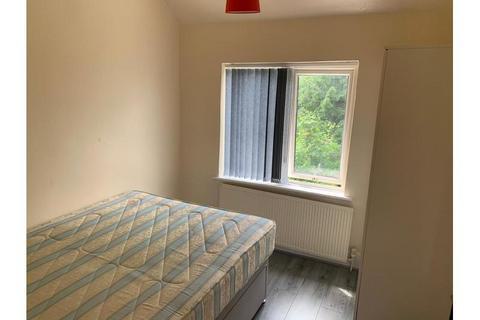
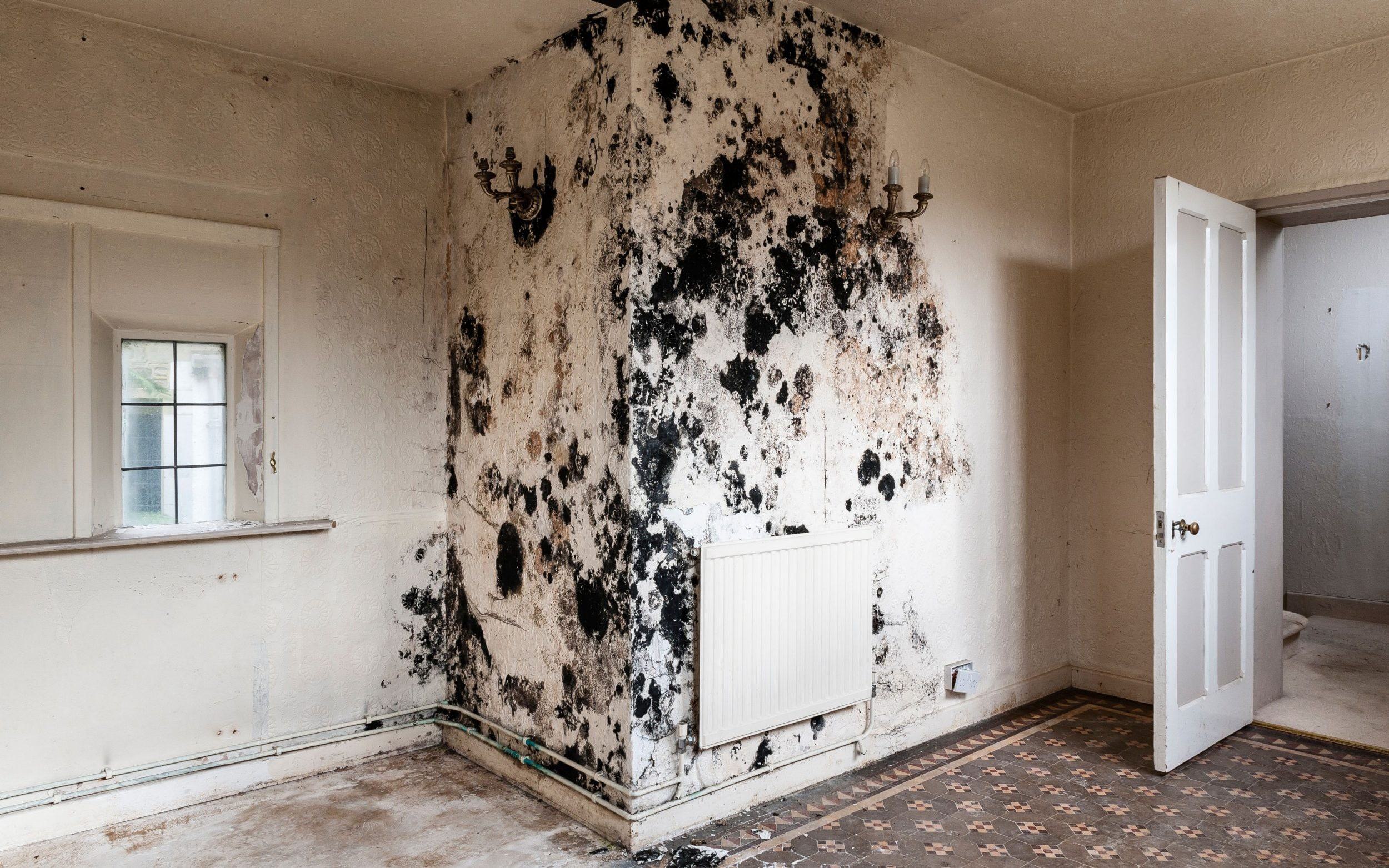
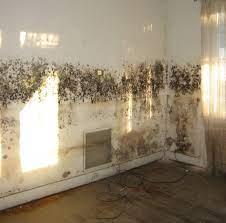
Below are a few examples from the dataset, illustrating typical 'clean' and 'mould-affected' scenarios encountered.
Clean Examples:

Mould-Affected Examples:
Phase 2: Model Development & Training (Python, TensorFlow/Keras)
-
Core Model: A Convolutional Neural Network (CNN) based on the VGG-16 architecture, utilizing transfer learning with ImageNet weights. The top classification layers were replaced and fine-tuned for the mould detection task.
# From your provided code from keras.applications.vgg16 import VGG16 from keras.models import Model from keras.layers import Flatten, Dense, Dropout base_model = VGG16(weights='imagenet', include_top=False, input_shape=(224, 224, 3)) for layer in base_model.layers: # Freeze base layers layer.trainable = False x = base_model.output x = Flatten()(x) x = Dense(256, activation='relu')(x) x = Dropout(0.5)(x) predictions = Dense(2, activation='softmax')(x) # For categorical_crossentropy model = Model(inputs=base_model.input, outputs=predictions) model.compile(optimizer='adam', loss='categorical_crossentropy', metrics=['accuracy']) - Training & Evaluation: The model was trained for 100 epochs using the Adam optimizer and categorical crossentropy loss. Callbacks were used to save the best performing model based on validation accuracy.
Model Accuracy & Loss Curves
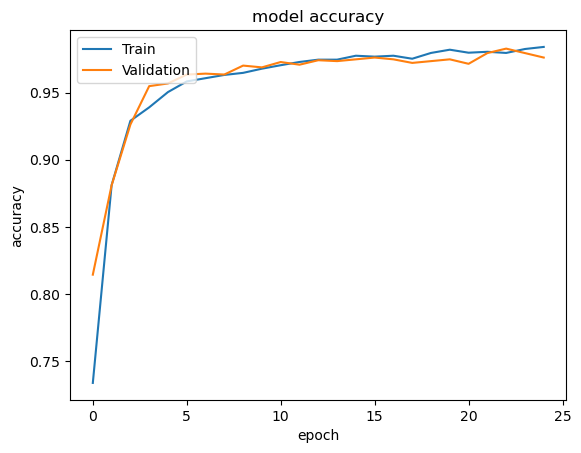
Accuracy and loss trends over training epochs for training and validation sets.
Normalized Confusion Matrix
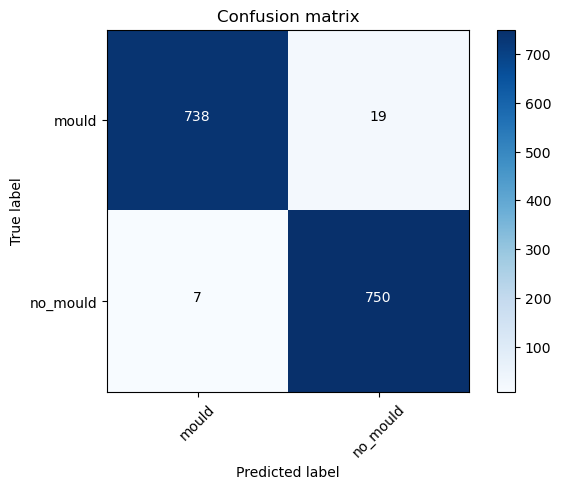
Performance on the test set, showing true vs. predicted labels.
- Key Result: Achieved approximately 96-98% validation accuracy , demonstrating strong predictive capability for distinguishing mould-affected areas from clean ones.
- Interpretability (Class Activation Maps - CAMs): To understand what the model learned and to ensure it was focusing on relevant image features, Class Activation Maps were generated. These maps highlight the regions in an image that were most influential for the model’s prediction.
# Conceptual CAM generation (key part from your code)
 last_conv_layer = model.get_layer('block5_conv3') # For VGG16
 new_model = Model(model.input, last_conv_layer.output)
# ... logic to calculate weighted sum of feature maps ...
 cam = cv2.resize(cam, (224, 224))
 cam = np.maximum(cam, 0)
 cam /= cam.max()
Below are examples showing the CAM overlay on both a 'clean' image and a 'mould-affected' image. The warmer colors (red/yellow) indicate areas of higher importance for the model's decision.
CAM on a Mould-Affected Image
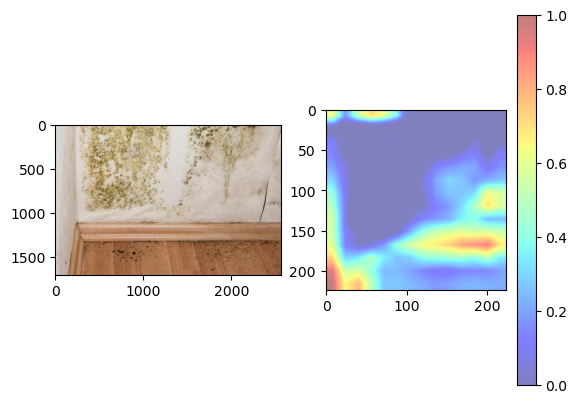
Model correctly focuses on the mouldy patches.
CAM on a Clean Image
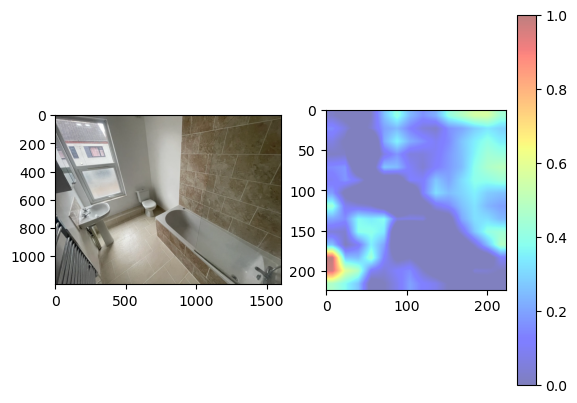
For a clean image, the activation is typically more diffuse or focuses on textures that are not mould.
Phase 3: Data Storage & Management (SQL - Conceptual Design)
To operationalize this, model predictions and associated metadata would be stored in a relational database (e.g., Oracle, PostgreSQL). This allows for querying, trend analysis, and integration with other business systems.
- Conceptual Schema:
Properties(PropertyID PK, Address, etc.)Inspections(InspectionID PK, PropertyID FK, Date)Images(ImageID PK, InspectionID FK, FilePath)Mould_Predictions(PredictionID PK, ImageID FK, Class, Confidence, Timestamp)
- Example SQL Query:
-- Find properties with recent high-confidence mould detection
SELECT p.Address, i.InspectionDate, mp.ConfidenceScore
FROM Properties p
JOIN Inspections i ON p.PropertyID = i.PropertyID
JOIN Images img ON i.InspectionID = img.InspectionID
JOIN Mould_Predictions mp ON img.ImageID = mp.ImageID
WHERE mp.PredictionClass = 'Mould' AND mp.ConfidenceScore > 0.90
  AND i.InspectionDate > DATE('now', '-30 days')
ORDER BY mp.ConfidenceScore DESC;
Phase 4: Visualization & Reporting (Power BI - Conceptual Design)
Data from the SQL database would feed interactive Power BI dashboards for housing managers, enabling:
- Risk Monitoring: KPIs on mould prevalence, high-risk properties, geographical hotspots (map visualization).
- Operational Insights: Tracking time from detection to remediation, effectiveness of interventions.
- Strategic Planning: Identifying trends, informing preventative maintenance strategies.
- Example DAX (Conceptual):
TotalHighRiskMouldProperties = CALCULATE(DISTINCTCOUNT(Properties[PropertyID]), Mould_Predictions[PredictionClass] = "Mould", Mould_Predictions[ConfidenceScore] > 0.90)
Outcomes & Impact
- Proactive Maintenance: Shifts from reactive repairs to early, preventative interventions.
- Improved Tenant Well-being: Reduces health risks associated with mould.
- Cost Savings: Minimizes costs of extensive damage and long-term repairs.
- Efficient Resource Allocation: Directs survey and maintenance teams effectively.
- Data-Driven Decisions: Empowers housing providers with comprehensive insights for strategy and compliance.